Patience Before Planting: How to Read Kitsap's Wet Spring Soil Before You Dig
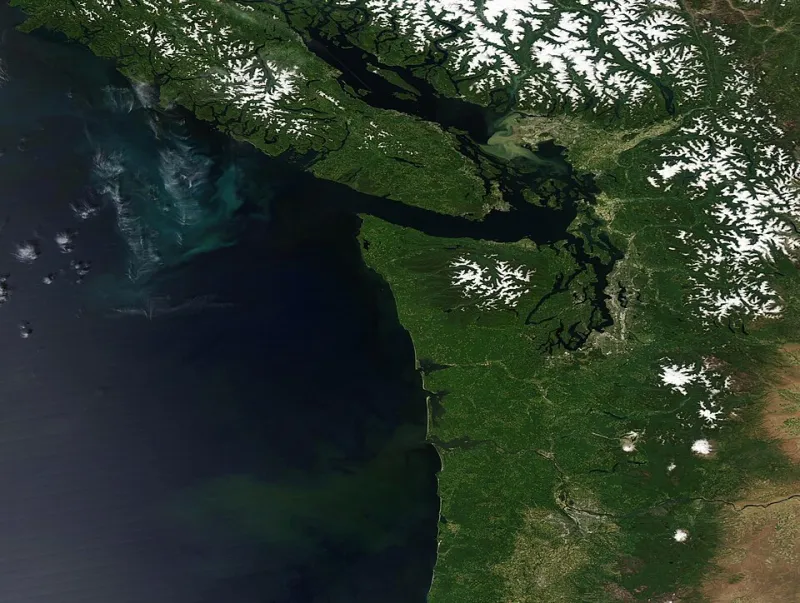
Photo: MODIS Land Rapid Response Team, NASA GSFC, Public domain, via Wikimedia Commons
Spring Is Coming — But Is Your Soil Ready?
Every February, gardeners around Kitsap County start getting that itch. The seed catalogs have been dog-eared since January, the raised beds are sitting empty, and there's that one warm afternoon that makes everything feel possible. But before you grab a shovel, take a breath — and take a closer look at what's under your feet.
Kitsap's spring mud season is one of the most misunderstood challenges in local gardening. The region averages well over 50 inches of rain annually, and much of it falls between October and April. That moisture doesn't just sit on top of the ground. It saturates the clay-heavy soils that dominate much of the peninsula, turning what might look like workable earth into a compaction trap waiting to happen.
Working wet soil is one of the most damaging things a gardener can do — and it's incredibly common here in the Pacific Northwest.
What Actually Happens When You Work Wet Soil
Soil isn't just dirt. It's a living structure made up of mineral particles, organic matter, water, air, and billions of microorganisms. That structure — full of tiny pores and channels — is what allows roots to push through, water to drain, and oxygen to reach plant roots.
When you step on, dig into, or till saturated soil, you're collapsing those pore spaces. Clay particles get squeezed together, and the result is compaction: a dense, airless layer that roots can't penetrate and water can't drain through. A single pass with a rototiller or even a few footsteps across a wet raised bed can undo years of soil building.
The damage isn't always visible right away, either. You might plant into compacted soil and see decent germination early on, only to watch plants stall out in June when roots hit that hard layer and can't go deeper.
The Simple Soil Squeeze Test
So how do you know when it's actually safe to work your beds? Forget the calendar — Kitsap's weather doesn't care what month it is. Instead, use the squeeze test.
Grab a handful of soil from about four inches deep and squeeze it firmly in your fist. Then open your hand and poke the clump with your finger.
- If the clump falls apart easily: Your soil is ready to work.
- If the clump holds its shape but crumbles when poked: Borderline — proceed gently.
- If the clump stays together like modeling clay: Walk away. Come back in a few days and test again.
This test takes about ten seconds and can save you weeks of recovery work. Make it a habit every time you're tempted to get out there early.
Raised Beds: Your Best Defense Against Mud Season
If you're tired of waiting out Kitsap's wet springs, raised beds are the single best long-term investment you can make. Because they sit above ground level, they drain faster, warm up earlier, and give you complete control over soil composition.
A well-built raised bed filled with a quality mix — we recommend a blend of compost, aged bark fines, and a small amount of perlite for drainage — can be workable weeks before your in-ground beds are ready. That's a meaningful head start in a region where our frost-free growing season is already compressed.
For new raised beds, aim for a minimum depth of 10 to 12 inches. If you're building on top of existing clay soil, consider laying cardboard underneath to suppress weeds and encourage earthworm activity, then fill with your amended mix. You won't need to break up the clay beneath at all — over time, the biology in your raised bed will do that work for you.
Improving Drainage in Existing Beds
Not everyone is starting from scratch, and that's okay. If you're working with established in-ground beds that stay soggy well into spring, there are a few approaches worth considering.
Add organic matter consistently. Compost is the universal answer for both clay and sandy soils. It opens up clay structure and helps it drain, while also improving water retention in looser soils. Top-dress your beds each fall with two to three inches of finished compost and let winter rain work it in.
Consider a French drain. For persistently waterlogged areas, a simple French drain — a gravel-filled trench with a perforated pipe — can redirect water away from planting zones. It's not glamorous, but it works.
Never walk in your beds. This one's free. Designate permanent paths, use stepping stones if needed, and stick to them religiously. Your soil structure will thank you for years.
Kitsap's Planting Windows: What the Weather Is Actually Telling You
Our last frost date in Kitsap typically falls somewhere between late March and mid-April depending on your specific location — lower elevations near the water tend to warm up a bit faster than inland areas. But frost date alone isn't the whole story.
Soil temperature matters just as much as air temperature for most crops. Cool-season vegetables like kale, peas, spinach, and lettuce can germinate in soil as cool as 40°F, making them genuine early-spring options here. But tomatoes, peppers, squash, and beans want soil at 60°F or above — and in Kitsap, that often doesn't happen until late May or even early June.
A simple soil thermometer (we carry them here at the nursery) takes the guesswork out entirely. Check soil temperature at a four-inch depth in the morning for the most accurate reading.
Early Spring Work That Won't Hurt Your Soil
Just because you can't dig doesn't mean there's nothing to do. Some of the most valuable spring garden prep work happens above the soil surface.
- Spread a fresh layer of compost or aged bark mulch on top of beds — no digging required.
- Prune back last year's dead perennial stems and ornamental grasses.
- Set up trellises and supports before plants need them.
- Direct-sow cold-tolerant seeds like spinach and peas directly on top of beds, pressing them gently into the soil surface without disturbing structure.
- Plan your layout, order seeds, and get transplants started indoors.
The gardeners who thrive in Kitsap aren't the ones who rush the season — they're the ones who use the waiting time wisely. When your soil finally passes the squeeze test and the sun starts to stick around, you'll be ready to move fast. And that's when the fun really starts.