Green Creep: How Moss and Algae Are Quietly Taking Over Your Kitsap Garden (And What to Do About It)
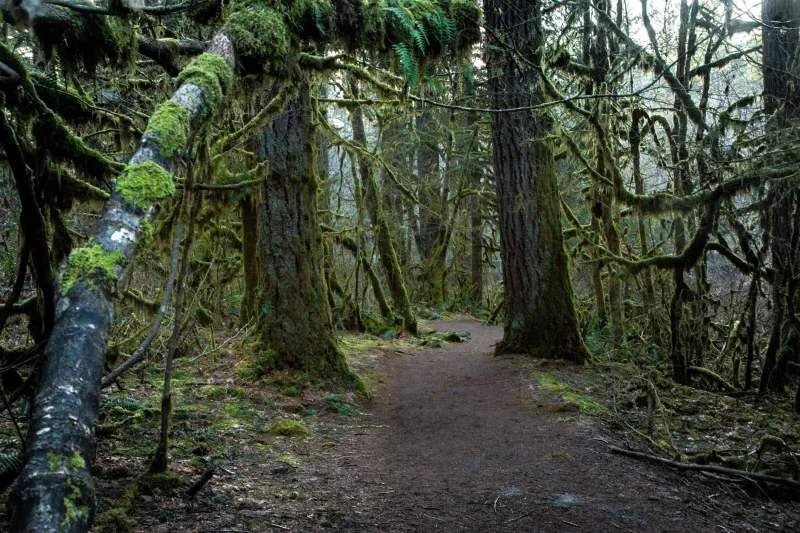
There's a particular kind of gardening problem that doesn't announce itself dramatically. No chewed leaves, no wilting overnight, no obvious culprit hanging around the scene of the crime. Moss and algae are the slow-moving, easy-to-ignore invaders of the Pacific Northwest garden — and by the time most Kitsap gardeners really notice them, they've already settled in like they own the place.
We spend a lot of time talking about deer, slugs, and aphids around here. Rightly so. But the green fuzz spreading across your patio stones, the slick film coating your raised bed edges, or the thick mat crowding out your lawn grass? That stuff deserves a conversation too.
Why Kitsap Is Basically a Welcome Mat for Moss and Algae
Let's be honest: if you were a moisture-loving organism looking for a dream home, you'd pick somewhere like Kitsap County. We get somewhere in the neighborhood of 55 to 60 inches of rain per year, most of it falling between October and April in a slow, persistent drizzle that never fully dries out. Add in our heavy tree canopy, north-facing slopes, and the way our clay-heavy soils hold onto water long after the rain stops, and you've got near-perfect conditions for moss and algae to thrive year-round.
Moss tends to move into lawns when grass is already struggling — usually because of shade, compacted soil, poor drainage, or low soil pH. It's not actually killing your grass so much as moving into the gaps that your grass left open. Algae, on the other hand, is more of a surface colonizer. It loves hard surfaces: concrete, flagstone, wooden decking, the sides of terracotta pots. Anywhere moisture sits and sunlight is limited, you'll find that greenish-black film starting to form.
Neither one is technically a pest in the traditional sense. Moss is a plant. Algae is closer to a microorganism. But both can cause real problems if left unchecked.
What They're Actually Doing to Your Garden
Moss in a lawn crowds out desirable grasses and creates an uneven, spongy surface that doesn't drain well. Over time, a mossy lawn becomes less functional — harder to walk on, harder to mow cleanly, and increasingly inhospitable to the grass you're actually trying to grow.
On hardscapes, algae is the bigger concern. That slick green or black film on your pathways, steps, and deck boards is a genuine safety hazard, especially in the wet months when it's at its thickest. Beyond the slip risk, algae and moss working together on porous surfaces like brick or natural stone can slowly work moisture into cracks, accelerating the freeze-thaw damage that breaks down those surfaces over time.
In planting beds, moss can form a dense mat over the soil surface that actually competes with shallow-rooted plants and groundcovers for moisture and light. It can also create an environment that encourages fungal issues by holding too much surface moisture around plant crowns.
Getting Ahead of It Without Chemicals
Here's the good news: you don't need to spray anything. Most chemical moss and algae treatments work by burning the growth rather than addressing why it showed up in the first place. Treat the symptom, and the underlying conditions will just bring it back. Treat the conditions, and you won't need to spray anything.
Improve drainage and airflow first. Moss and algae both need sustained moisture to thrive. If your lawn has low spots where water pools, grade them out or install a simple French drain. In planting beds, consider top-dressing with compost to improve soil structure so water moves through rather than sitting. Pruning back overhanging branches to let more light reach the ground makes a bigger difference than most people expect.
Aerate compacted soil. If your lawn is mossy, there's a good chance the soil underneath is compacted. Core aeration in the fall opens up the soil, improves drainage, and gives grass roots room to grow deeper — which makes the lawn more competitive against moss naturally.
Adjust soil pH in your lawn. Moss genuinely prefers acidic soil, and our Pacific Northwest soils already lean that direction. A soil test (we can help you get started with that) will tell you where your pH sits. If it's below 6.0, a light application of dolomitic lime in the fall can shift conditions enough to favor grass over moss over time. This isn't a quick fix, but it's a lasting one.
Scrub hard surfaces regularly. For patios, paths, and decking, a stiff brush and plain water will remove algae buildup if you do it consistently — say, once or twice a year before the heaviest rain season. A pressure washer works well too, though be careful with softer materials like certain sandstones or older wood that can be damaged by high pressure. Getting into a rhythm of light maintenance is far easier than trying to deal with years of buildup.
Use texture and material choices to your advantage. When you're replacing or adding hardscape, think about surface texture. Rough-textured pavers and stones are less hospitable to algae than smooth, polished ones because they don't hold a continuous film of moisture the same way. Good-quality sealers applied to concrete and some natural stones can also reduce the foothold algae needs to establish.
Let light in strategically. We're not suggesting you cut down trees — especially not native ones. But selective limbing to raise canopies and let more dappled light reach the ground is often worth having an arborist take a look at. More light means faster surface drying after rain, and faster drying means less moss and algae.
When Moss Is Actually Fine (Or Even Welcome)
We'd be doing you a disservice if we didn't mention this: moss isn't always the enemy. In a shaded woodland garden, a soft moss groundcover can be genuinely beautiful and ecologically appropriate. Under a Douglas fir, fighting moss in favor of lawn grass is often a losing battle anyway. Sometimes the right call is to lean into what your site naturally wants to grow.
If you've got a shady corner that keeps going mossy no matter what you do, it might be worth considering whether a deliberate moss garden — or a planting of shade-tolerant groundcovers like native ginger or sweet woodruff — would serve you better than a lawn you're constantly battling to maintain.
The Bigger Picture
Managing moss and algae in a Kitsap garden isn't really about any one technique. It's about understanding your site — where water moves, where light reaches, where soil compacts — and making incremental adjustments that shift conditions in your favor. That's slower than spraying, but it's also more durable and a lot better for the surrounding ecosystem.
Stop by and talk to us if you're trying to figure out what's going on in a specific corner of your yard. Sometimes it takes a fresh set of eyes to spot the drainage issue or shade problem that's been feeding the green creep all along.